
Dirndlschürze: How to Choose Colour, Material and Bow
|
Time to read 11 min

|
Time to read 11 min
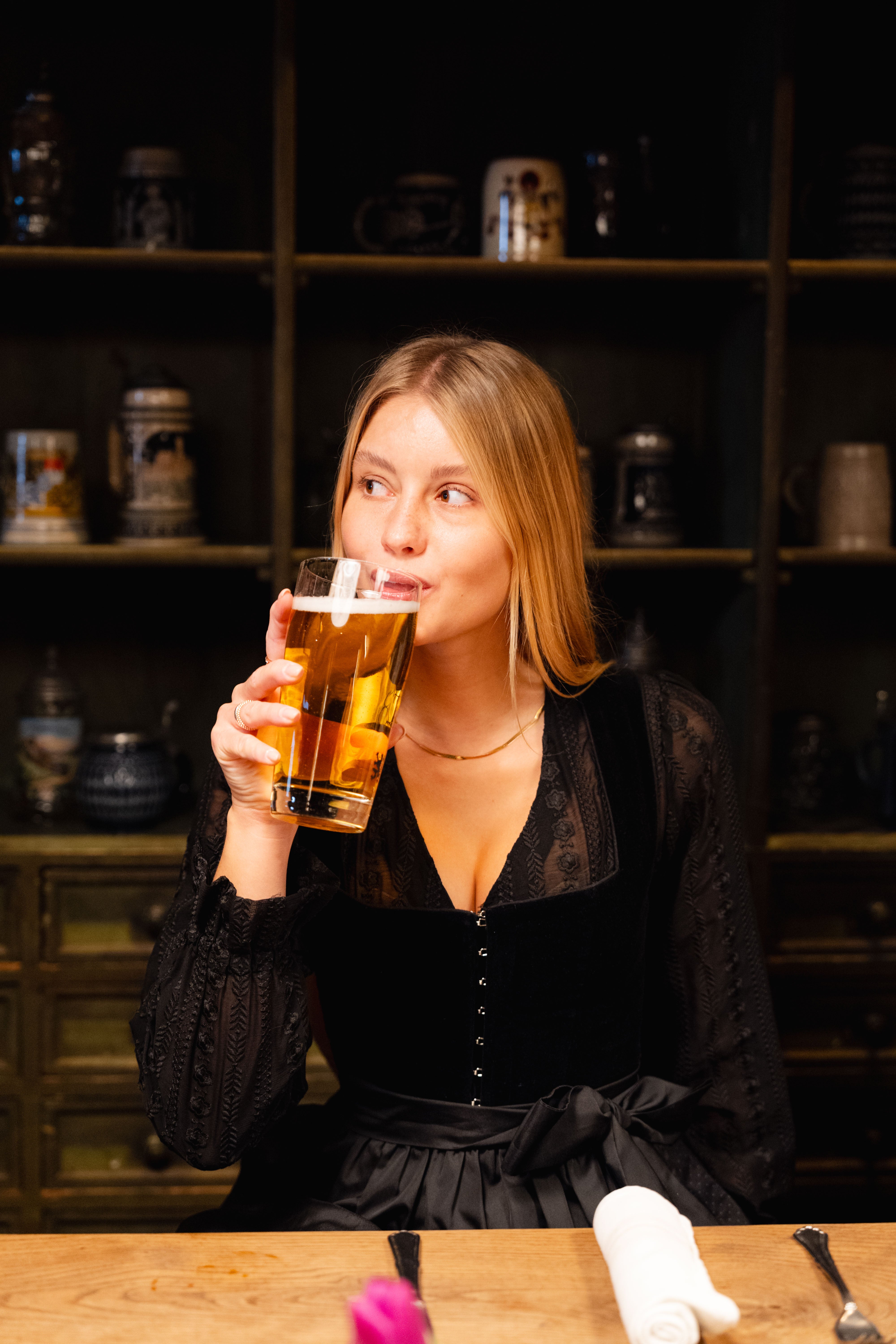
The Dirndlschürze is the heart of any Dirndl look. It gives the outfit its signature character, opens up endless colour combinations and, through the bow, even reveals the wearer's relationship status. But which colour suits which Dirndl? Which fabric is right for Oktoberfest, a wedding or a folk festival? And how do you tie the bow correctly? This guide answers everything you need to know about the Dirndlschürze.
Why you can trust us:
✓ We have been experts in Trachten fashion and Dirndl for over 5 years
✓ We have already dressed more than 10,000 Wiesn visitors
✓ We follow the latest Trachten trends and know every new collection
Want to learn more? Visit our store
Table of contents:
The Dirndlschürze is not an optional accessory but an essential part of the traditional Dirndl. Historically, the apron was a protective garment worn by farmwomen and housekeepers. Over the centuries it evolved into a fashionable element that today is what truly completes the Dirndl look.
Without an apron, a Dirndl simply is not complete. It structures the silhouette, accentuates the waist and adds colour accents that bring the whole outfit to life. With a different Dirndlschürze you can reinterpret the very same Dirndl dress from scratch, from traditional and understated to modern and bold.
The apron is tied at the front of the Dirndl, either on the left, the right or in the centre, and the position of the bow traditionally signals the wearer's relationship status. A bow on the right means taken, on the left means single, and in the centre stands, depending on the region, for a bride or a widow. This custom is no longer widely known, but at every Oktoberfest there is always someone who still checks which side the bow is on.
In the Dirndlschürzen collection at dirndl.com you will find Dirndlschürzen in every colour, length and material, from classic to modern, from plain to patterned, from cotton to satin.

Especially practical: you can buy Dirndlschürzen individually and combine them exactly as you like. One Dirndl with three different aprons gives you three completely different outfits. That makes the Dirndlschürze the most cost-effective upgrade for your Trachten wardrobe.
For a perfectly coordinated look we recommend matching your Dirndlschürze and Dirndlbluse. Our guide: Which Dirndlbluse suits which Dirndl? explains exactly how to do it.
The length of the Dirndlschürze is one of the most important decisions when buying. The basic rule: the apron should always be the same length as, or slightly shorter than, the Dirndl skirt. A noticeably shorter apron can make a deliberate modern statement, whereas a noticeably longer apron quickly looks out of place.
Short Dirndlschürzen (up to about 50 cm) suit short mini Dirndl. They accentuate the legs and give the look a youthful, modern touch. For short Dirndl, an apron in a light fabric or with fine embroidery is often the best choice.
Midi Dirndlschürzen (around 55 to 75 cm) are the most versatile option. They harmonise with most classic midi Dirndl and look just as right at a folk festival as at formal occasions. Our most popular models, such as the Anemone and the Corinna series, come in midi lengths that suit the vast majority of Dirndl dresses.
Long Dirndlschürzen (from 80 cm) are made for maxi Dirndl. They lend the long Dirndl a festive elegance that is particularly suited to weddings, gala evenings and official occasions. Long aprons in fine fabrics such as silk or satin create a majestic, glamorous look.
A practical tip: when trying on, put on the actual Dirndl and tie the apron at the front. That way you can see immediately whether the length is right. This is especially true when you buy Dirndlschürzen individually: always measure the length and width of the skirt beforehand and compare them with the product dimensions.
For Dirndl dresses with a particularly full skirt, wider aprons work best, as they pick up the volume of the skirt harmoniously. Narrower aprons, on the other hand, can look lost on very full skirts. Our Dirndl size guide explains everything about the right fit.
The material of the Dirndlschürze determines its look, comfort and suitable occasion. Here is an overview of the most important materials:
Cotton is the classic material for everyday Dirndlschürzen. Cotton aprons are breathable, hard-wearing and easy to care for. They are particularly suited to summer folk festivals, everyday wear and occasions where comfort matters more than glamour. Fine embroidery or woven patterns turn simple cotton aprons into real eye-catchers.
Lace gives the apron a romantic, feminine touch. Lace aprons are especially popular for weddings in Tracht and for formal occasions. They combine beautifully with plain, single-colour Dirndl dresses, where they can act as the only decorative element. White or cream lace aprons look particularly elegant.
Silk and satin are the most luxurious materials for Dirndlschürzen. They drape especially beautifully, shimmer in the light and give the whole outfit a lavish, festive character. Silk aprons are ideal for weddings, gala events and festive evenings. They require more careful handling, but they look absolutely stunning.
Linen is a traditional, natural material deeply rooted in the Bavarian and Austrian Trachten tradition. Linen aprons look rustic and authentic, develop a pleasant patina with wear and are particularly suited to the classic, traditional Dirndl look.

For Oktoberfest and the Wiesn we recommend fabrics that are durable and easy to care for. Cotton and light woven fabrics are the first choice here. Silk or satin can quickly stain or get damaged with heavy use.
For our apron collection we rely on high-quality woven fabrics with fine embroidery that look great both at the folk festival and at formal occasions. Details such as button plackets, gathers and embroidery are not mere extras but hallmarks of traditional Trachten craftsmanship.
The colour of the Dirndlschürze is the most creative decision in Dirndl styling. This is where personal taste and a feel for colour harmony show most clearly.
Classic combinations rely on harmony: a red Dirndl goes with a white or black apron, a blue Dirndl with a sky-blue or white apron, a green Dirndl with a beige or olive-green apron. These safe combinations always work and never look out of place.
Contrasting combinations are bold and modern: a burgundy apron with a dark-green Dirndl, a mustard-yellow apron with a light-blue Dirndl, a bright-pink apron with a black Dirndl. Such combinations take a little courage, but at festivals and in photos they often look particularly striking.
Patterns on the Dirndlschürze add another dimension to the look. Floral-patterned aprons paired with plain Dirndl create a lovely balance. Striped or checked patterns look more traditional and rustic, while a floral woven pattern feels elegant and feminine. The rule of thumb: if the Dirndl dress already carries a pattern, the apron should be plain, and vice versa.
Popular colours for 2026 for Dirndlschürzen: sage green, burgundy, fir green, light blue, rose and classic grey. These colours harmonise with the current Dirndl colour palettes and give every look that special something.

A handy trick for colour combinations: pick up a colour that appears as an accent in the Dirndl fabric. If your Dirndl has, for example, a small red floral pattern on a blue background, a red apron is a perfect match because it picks up and reinforces the dress's accent colour.
For bold colour combinations we recommend our Corinna apron series, available in grey, fir green, light green, rose, dark red, blue and light blue. That way you are guaranteed to find the perfect colour for every Dirndl. For more styling inspiration, see our guide: Which Dirndl colour suits me?
Tying the Dirndl bow is one of the most iconic moments of putting on a Dirndl. But the bow is not just decoration, it carries an old message within it.
Bow on the left: the wearer is single and available. The left is traditionally the side of openness and freedom. At Oktoberfest, the left bow is for many young women the subtle signal that they are open to new acquaintances.
Bow on the right: taken or married. The right is the side of commitment and loyalty. Whoever wears the bow on the right is signalling: I am already spoken for.
Bow centred at the front: depending on the region and tradition, this stands for a bride (on the wedding day) or a widow. In some regions this position is simply used as a stylistic element with no traditional meaning.
Bow centred at the back: waitresses at Oktoberfest traditionally wear the bow at the back. This is the famous signal that someone is part of the service staff.
Tying it is simple in itself: the apron is fastened at the front of the Dirndl, the long ribbons are wrapped around the waist and tied into a bow at the front. Make the loop nice and full and keep the ends evenly long. With a little practice the bow sits perfectly and holds all evening.
A tip for a beautiful, full bow: pull the loops out generously and do not leave the ends too short. A full, symmetrical bow looks far more elegant than a small, limp one. With wide apron ribbons you can tie the bow especially lush and traditional.
If you want to do it absolutely right: the traditional Dirndl bow once had a clear meaning and was taken seriously. Today it is a charming custom for most people, but at genuine Trachten events and in Bavaria people really do still check which side the bow is on. Our guide on putting on a Dirndl step by step explains every detail of dressing correctly.
The right Dirndlschürze depends heavily on the occasion. What works at a folk festival can be out of place at a traditional wedding, and vice versa.
Oktoberfest and Wiesn: here the rule is the more colourful and expressive, the better. Strong colours, lively patterns and aprons with embroidery fit the cheerful Wiesn atmosphere perfectly. Cotton aprons in red, blue, green or burgundy are classics that are never wrong. Aprons with floral embroidery or traditional Trachten patterns are especially popular.
Weddings in Tracht: here we recommend elegant, understated Dirndlschürzen in high-quality fabrics. White or cream lace aprons for the bride's Dirndl, delicate pastel tones for guests. Pay attention to the sheen and quality of the materials: satin, silk or fine cotton batiste look more festive than ordinary apron fabric.
Folk festivals and regional celebrations: similar to the Wiesn, but often a little more restrained. Traditional patterns and more muted colours are more appropriate here than at the Munich Oktoberfest. The Corinna apron series in fir green or grey pairs wonderfully with classic folk-festival Dirndl.
Everyday wear and city festivals: lighter, more easy-going materials such as cotton are ideal. Aprons in more modern cuts or with contemporary patterns make the Dirndl more suited to everyday wear without losing its traditional character.
If you want to cover several occasions without buying many different Dirndl dresses: invest in one high-quality Dirndl in a neutral colour and buy two or three different Dirndlschürzen. With a festive lace apron for weddings, a colourful cotton apron for the folk festival and an understated apron for everyday wear, you are perfectly equipped for every occasion.
At dirndl.com you will find Dirndlschürzen for every occasion and every taste. From the classic Anemone apron to the modern Carla and Corinna series: our apron range has the right apron for every wearer. You will find all current offers directly in the collection.
The Dirndlschürze is the most versatile element of the Dirndl look. With the right apron you can reinterpret the very same Dirndl dress for different occasions, whether for the Wiesn, a wedding or a city festival. The key decisions: choose the length to match the Dirndl skirt, select the material according to the occasion (cotton for folk festivals, lace and silk for formal events), combine the colour either harmoniously or in bold contrast, and tie the bow on the right side. With these four basic rules, the perfect Dirndl look is guaranteed.
In our Dirndlschürzen shop you will find high-quality aprons in every colour, length and material. From classic to modern, from plain to patterned: the perfect Dirndlschürze for you is among them.
If you are looking for a new Dirndl that is easy to care for and high in quality, feel free to drop by our store
Our most popular Dirndlschürzen
As a basic rule: the apron should be the same length as, or slightly shorter than, the Dirndl skirt. For a patterned Dirndl, choose a plain apron and vice versa. Colour tip: picking up one colour from the Dirndl pattern in the apron creates a harmonious overall look. For safe combinations, white, black or beige work with almost any Dirndl.
A bow on the left traditionally means the wearer is single. A bow on the right signals taken or married. Centred at the front stands, depending on the region, for a bride or a widow, while centred at the back is the sign for service staff. This tradition is still observed at Oktoberfest and at Trachten festivals.
For folk festivals and Oktoberfest, cotton is the best choice: hard-wearing, easy to care for and breathable. For weddings and formal occasions, lace, silk or satin are more suitable. For everyday wear, light woven fabrics with fine embroidery that wash well are ideal.
Wrap the apron ribbons around the waist and tie them into a bow at the front on your chosen side (left for single, right for taken). Pull the loops out generously and keep the ends evenly long. With a little practice the bow sits perfectly and stays beautiful all evening.
Yes, Dirndlschürzen can and should be bought individually. With two or three different aprons you can recombine the same Dirndl dress for different occasions, which is both economical and stylistically exciting. At dirndl.com there is a wide selection of Dirndlschürzen available to buy individually.
Discover matching Trachten

Stay up to date
Sign up and be the first to find out about new collections, exclusive offers and styling tips for your perfect traditional outfit.